Truck Pulls Right Diagnosis: What to Check
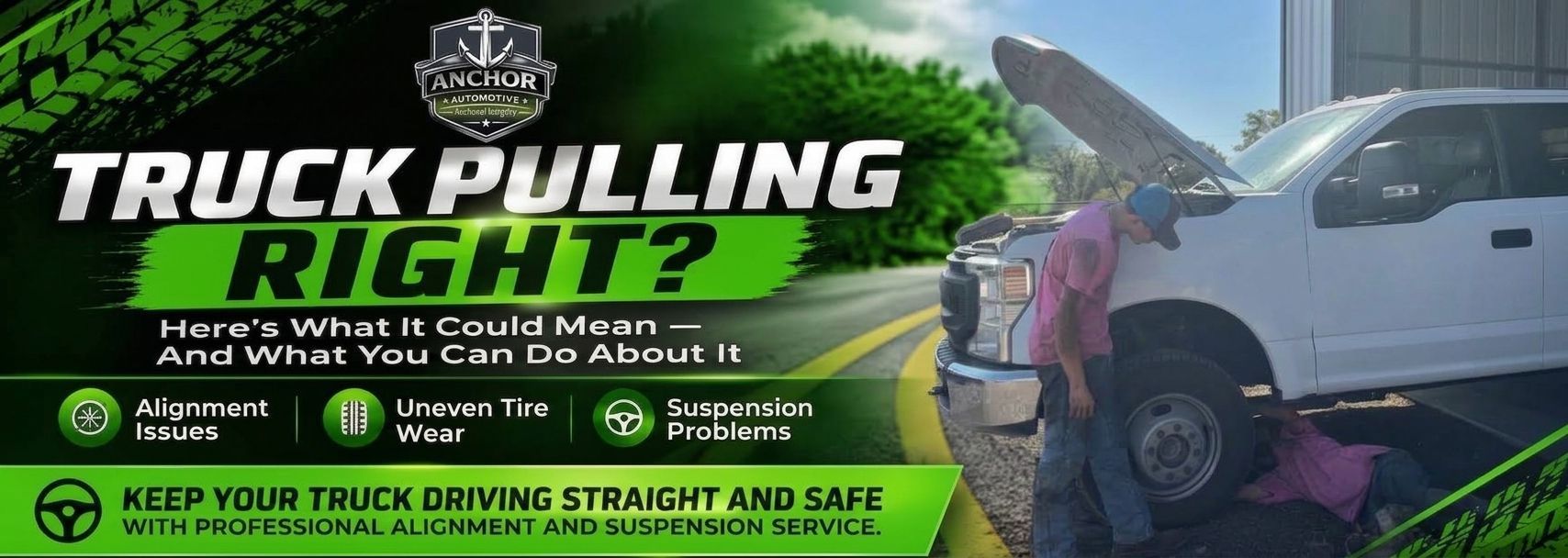
You feel it on a straight road. The steering wheel is centered, but the truck keeps drifting right and you are making small corrections the whole time. That is where proper truck pulls right diagnosis starts - with the exact symptom, the road conditions, and confirmed testing before anyone starts selling tires, alignments, or front-end parts.
A pull is not the same thing as a vibration, a loose steering feel, or a steering wheel that sits off-center after an alignment. Those problems can overlap, but they are not identical. If the truck consistently moves right without driver input, there is a reason. The job is to prove that reason, not guess at it.
Truck pulling right? Problems to look out for:
- Road crown (slope of the road causing a mild right drift)
- Uneven tire pressure side to side
- Uneven tire wear patterns
- Separated or damaged tire belts
- Mismatched tires (brand, size, construction, or tread design)
- Tire radial pull (a single tire causing drift even with proper alignment)
- Incorrect or incomplete wheel alignment
- Worn or damaged suspension components (ball joints, control arm bushings, etc.)
- Worn or sticking steering components (tie rods, steering gear issues)
- Brake drag on the right side (sticking caliper, hose, or hardware)
Truck pulls right diagnosis starts with the basicS
The first question is simple: does the truck truly pull right, or is it following the road? Many roads have a crown that slopes slightly to the shoulder for drainage. On some roads, especially in Texas, that slope is enough to create a mild right drift even in a healthy vehicle. That is why a good diagnosis includes a road test on more than one surface when possible.
Tire pressure is next. A low tire on one side can create a pull, and it does not have to be completely flat to matter. Even a smaller pressure difference can change how the truck tracks. On heavy trucks, towing vehicles, and diesel pickups with load-range tires, pressure matters even more because the tire carcass is stiffer and the contact patch changes differently than it would on a passenger car.
Tire condition also matters more than many drivers expect. Uneven wear, separated belts, mismatched tire construction, and irregular tread patterns can all create a right pull. This is one of the most common reasons guess-based repairs waste money. A truck can leave with new suspension parts and still pull because the issue was in the tire all along.
The most common causes of a truck pulling right
Alignment is the cause most people think of first, and sometimes that is correct. Camber, caster, and toe all affect how a truck behaves on the road. But "it needs an alignment" is not a diagnosis by itself. Alignment numbers need to be measured, reviewed, and interpreted in context.
Caster differences side to side are a common source of pull. In general, the vehicle tends to pull toward the side with less positive caster. Camber can do it too, especially if one side is noticeably more positive or negative than the other. Toe problems usually show up more in tire wear and steering response, but severe toe issues can contribute to a pull.
Brakes are another major possibility. A sticking caliper, restricted brake hose, or dragging pad on the right side can make the truck lead or pull. Sometimes the driver notices it mainly during braking. Other times the brake drag is present enough that the truck feels off even while cruising. Heat comparison, wheel rotation resistance, and brake inspection help prove that problem instead of assuming it.
Suspension and steering wear can also be part of the story. Worn ball joints, control arm bushings, tie rods, track bar issues, or damaged components from curb strikes and potholes can shift alignment angles under load. On trucks, especially work trucks and towing vehicles, those worn parts may not show up as a dramatic clunk. They may show up as wandering, pull, tire wear, or unstable steering feel.
Wheel bearing problems can create similar symptoms in some cases. So can ride height issues from sagging springs or worn components that change geometry. If the truck has been overloaded regularly, used hard off-road, or has had previous front-end work, that history matters.
Why tire-related pulls fool so many people
A tire pull can look exactly like an alignment problem from the driver seat. That is why one of the most useful tests is rotating tires side to side when appropriate and safe to do so as part of the diagnostic process. If the pull changes direction or improves significantly, that points strongly to a tire issue.
This is where disciplined testing protects your wallet. If the tires are the cause, replacing steering parts will not fix it. If alignment angles are off because a suspension part is bent or worn, an alignment alone will not hold. If a brake is dragging, the truck may keep pulling until that brake fault is corrected. The symptom is simple. The cause is not always simple.
Heavier trucks add another layer. Aggressive tread patterns, uneven wear from towing, and previous underinflation can all affect tracking. Diesel pickups also tend to carry more weight over the front axle, which can make certain tire and suspension issues show up more clearly.
What a proper inspection should include
A real truck pulls right diagnosis should begin with a road test and a conversation. When did it start? Did it happen after tire replacement, suspension work, brake service, hitting a pothole, or towing a heavy load? Does it pull all the time, only when braking, or only at highway speeds? Those details shorten the path to the truth.
From there, the inspection should verify tire pressures, tire size and condition, and obvious signs of irregular wear or damage. Brake drag should be checked, not assumed. Steering and suspension components should be inspected for play, damage, and worn bushings. Ride height should be considered when the platform is sensitive to it.
Then alignment measurements should be taken. Not estimated. Measured. The numbers matter, but so does how those numbers relate to the truck's symptom and component condition. A printout by itself is not the same as diagnosis. If a caster or camber issue is present, the next step is determining why it is present.
When an alignment is the fix - and when it is not
Sometimes the answer really is a straightforward alignment correction. That is especially true after normal wear, minor adjustment drift, or recent suspension work where the angles simply were not set correctly. But even then, the truck should be checked for tire condition and worn components first. Otherwise, you may align around a larger problem.
An alignment is not a cure for a separated tire, a seized caliper, a bent component, or excessive looseness in the front end. It also will not correct a steering wheel issue caused by mismatch in tires or a brake pull that only appears under pedal application. Good shops know the difference. Honest shops explain the difference.
Intermittent pulls are harder - but still diagnosable
Some trucks do not pull right on every drive. That can happen when the brake drag is temperature-related, when a tire issue shows up more at certain speeds, or when a suspension component shifts under load. It can also happen if the symptom is being confused with road crown on familiar routes.
Intermittent does not mean imaginary. It means the test plan has to be more careful. In those cases, a detailed description from the driver matters. When it happens, how strong it feels, whether braking changes it, and whether towing makes it worse can all point the inspection in the right direction.
Why guessing costs more than testing
A truck that pulls right often gets treated with a chain of assumptions. First alignment. Then tires. Then maybe front-end parts. Sometimes one of those guesses accidentally fixes it. Often it does not. That is how owners end up paying multiple times for one problem.
The better approach is simple: test it, prove it, fix it. If the right front brake is dragging, prove it. If the left front tire is creating a conicity pull, prove it. If caster is out because of worn suspension parts, prove it. Once the cause is confirmed, the repair decision becomes clear and defensible.
That matters even more if the truck is a daily driver, work vehicle, or tow rig. A pull is not just annoying. It can accelerate tire wear, increase driver fatigue, and mask a safety-related issue in steering or braking. Waiting too long can turn one fault into several.
When to schedule an inspection
If the truck drifts right consistently on multiple roads, if the steering wheel is no longer behaving normally, if braking changes the direction of pull, or if tire wear is showing up unevenly, it is time for an inspection. The same goes for any pull that starts after recent repairs, impact damage, or tire replacement.
At Anchor Automotive, that means confirmed testing before parts replacement and a clear explanation of what was found. No pressure. No guessing. Just a diagnosis built to protect your time, your tires, and the reliability you depend on.
If your truck keeps asking for steering correction every mile, listen to it early. Small pulls have a way of becoming expensive ones when nobody stops to prove the cause.