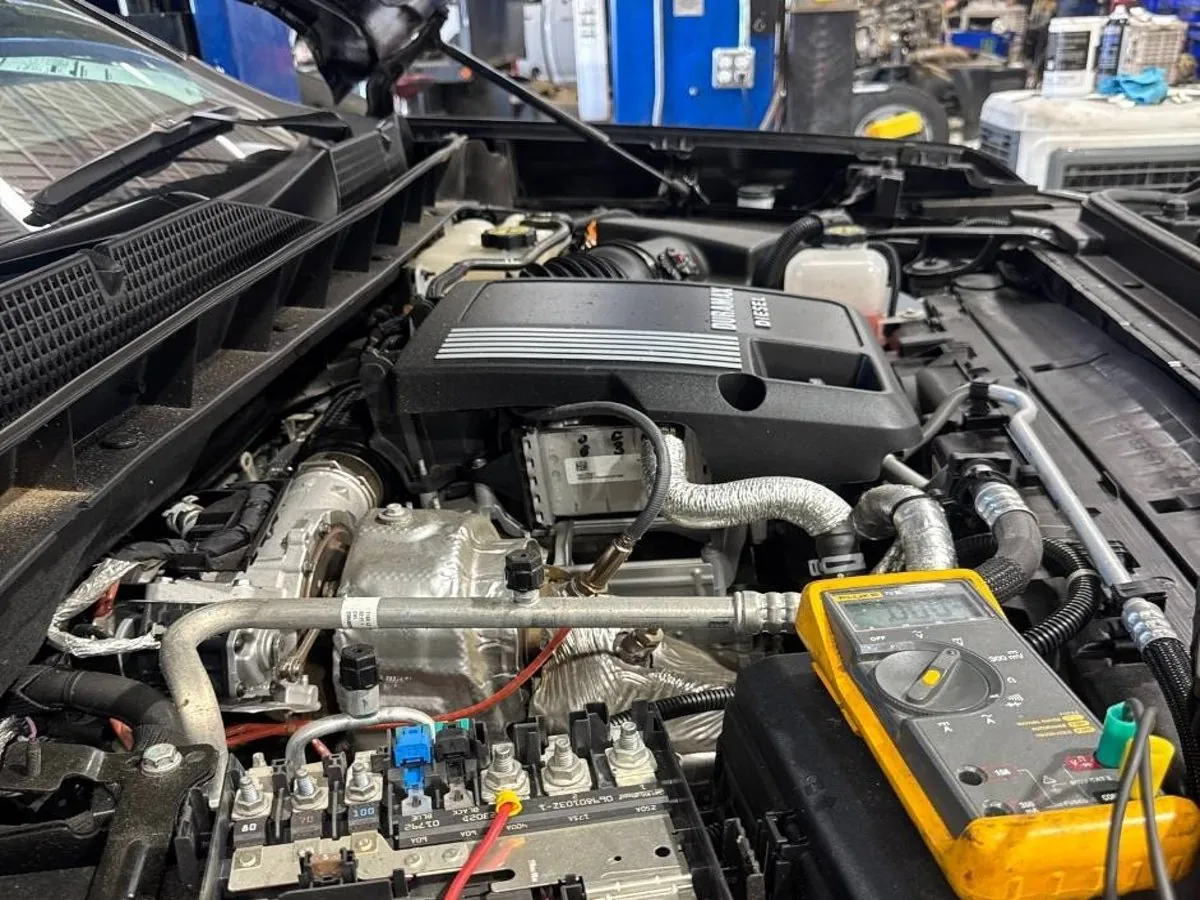
Multimeter and test leads in an open engine bay at Anchor Automotive in Springtown.
Flashing versus steady: decide what to do first
A flashing malfunction light can signal a misfire that raises exhaust temperature enough to damage the catalytic converter. A steady light with normal operation still deserves a prompt appointment, but a light alone cannot establish a safe driving distance. Follow your own vehicle manual and describe any new symptoms when calling. Ford: engine warning lamps explains the misfire warning for a specific Ford application; instructions and symbols vary by vehicle.
| What you notice | What matters next |
|---|---|
| Flashing light and rough running | Stop safely and arrange assistance; do not keep loading the engine. |
| Steady light, otherwise normal operation | Schedule testing promptly. Watch for worsening behavior and follow the manual. |
| Light comes and goes | Record the conditions. An intermittent light can leave useful stored information. |
| No light, but stalling or hard starting | A warning light is not required for a real fault. Explain the behavior, not just the dashboard. |
What a scan tells you—and what diagnosis adds
A code reader retrieves information recorded by the vehicle. Diagnosis asks why that information appeared. A lean-condition code, for example, may involve an air leak, fuel delivery, an exhaust leak, electrical data or mechanical condition. Our auto diagnostics service in Springtown connects the symptom to a test plan before a repair recommendation.
| Question | Code scan | Diagnostic investigation |
|---|---|---|
| What was detected? | Retrieves stored fault codes. | Reviews codes, related modules and captured operating conditions. |
| Why did it happen? | Usually does not establish a cause. | Tests the relevant circuit, air, fuel or mechanical system. |
| What should I approve? | A code by itself is not a repair estimate. | Explains findings, remaining uncertainty and the proposed next step. |
Why a misfire code does not automatically mean a bad coil
Illustrative example—not an Anchor repair case: a code points to a misfire on one cylinder. A technician may need to distinguish spark-plug or coil trouble from an injector issue, a wiring fault or a cylinder that cannot seal properly. The same felt shake can have very different repair paths.
Checking power supply and connections matters even when ignition is suspected. Delphi: ignition diagnosis and causes describes these influences. Depending on the evidence, testing may also include live-data review, voltage-drop measurements, smoke testing for air leaks, fuel-system checks or compression testing. Not every vehicle needs every test.
Agree on the diagnostic scope before work starts
The initial diagnostic evaluation is $99.99 and includes one hour of testing for one concern. We waive that initial fee when you approve our repair estimate. A popping noise, an A/C problem, and a check-engine light are separate concerns unless testing shows they share one cause. Before further testing, another concern, or disassembly, we explain the next step and any added charge, then call or text for your approval. Additional authorized work is separate from the initial fee waiver.
Ask what the initial authorization covers, what findings will be explained and what would require additional testing time. Intermittent faults may not occur during the first visit; access to a buried component or a mechanical teardown can change the scope. Confirm the approval limit and how you will receive an estimate update before authorizing work beyond it.
A useful report distinguishes a confirmed failure from a suspected cause and states how the proposed repair will be checked. A diagnostic fee is not a promise that every concern can be resolved in one session. For a symptom that returned after earlier work, use the separate second-opinion guide to organize the repair history.
Bring the conditions that make the light appear
- Year, make, model, engine and current mileage.
- Whether the light flashes or stays on, plus the exact messages.
- Cold start versus hot restart; acceleration, idle, wet weather or towing.
- Recent repairs, battery work, fuel stops and any existing scan reports.
- Whether the concern improved, changed or stayed the same after earlier work.
Do not clear codes or disconnect the battery simply to turn off the light before the appointment; stored history and freeze-frame data may help. Record notes or dashboard photos only while parked, or have a passenger document them safely.
Review the diagnostic offer
The $99.99 initial evaluation covers one hour of testing for one concern. The original fee is waived on approving our repair estimate. Separately authorize added testing or a second concern by call or text.
Frequently asked questions
Do you perform state emissions testing?
No. Anchor Automotive does not perform state emissions testing or emissions inspections for vehicle registration. We offer mechanical-condition inspections and diagnostic repair. Diesel emissions-system diagnosis is a separate repair service.
Can I drive with a flashing check engine light?
Do not continue driving normally. If it flashes with shaking, stalling or major power loss, stop safely, shut down and arrange assistance. Follow the vehicle manual and ask the shop about towing.
What does the diagnostic charge include?
Confirm the initial testing scope and authorization limit when scheduling. The appropriate tests depend on the concern; additional monitoring or access may need a separate approval.
Does a sensor code prove the sensor is bad?
No. The sensor may be reporting a real condition, or its wiring, power or ground may be involved. Testing separates those possibilities.
Can there be a problem without a warning light?
Yes. Starting, mechanical, electrical and early drivability faults do not always set a light.
Should I clear the codes before visiting?
Usually no. Preserve the fault history unless a qualified technician directs otherwise for a specific reason.
Keep reading
Service information
Technical references
Manufacturer and industry references support the explanations above. Use the instructions and specifications for your exact vehicle; examples are not universal repair procedures.
Schedule check engine light diagnosis
Tell us whether the light is flashing or steady and how the vehicle runs. Anchor Automotive is at 7551 N FM 51 in Springtown; call first if you are unsure whether the vehicle should be towed.