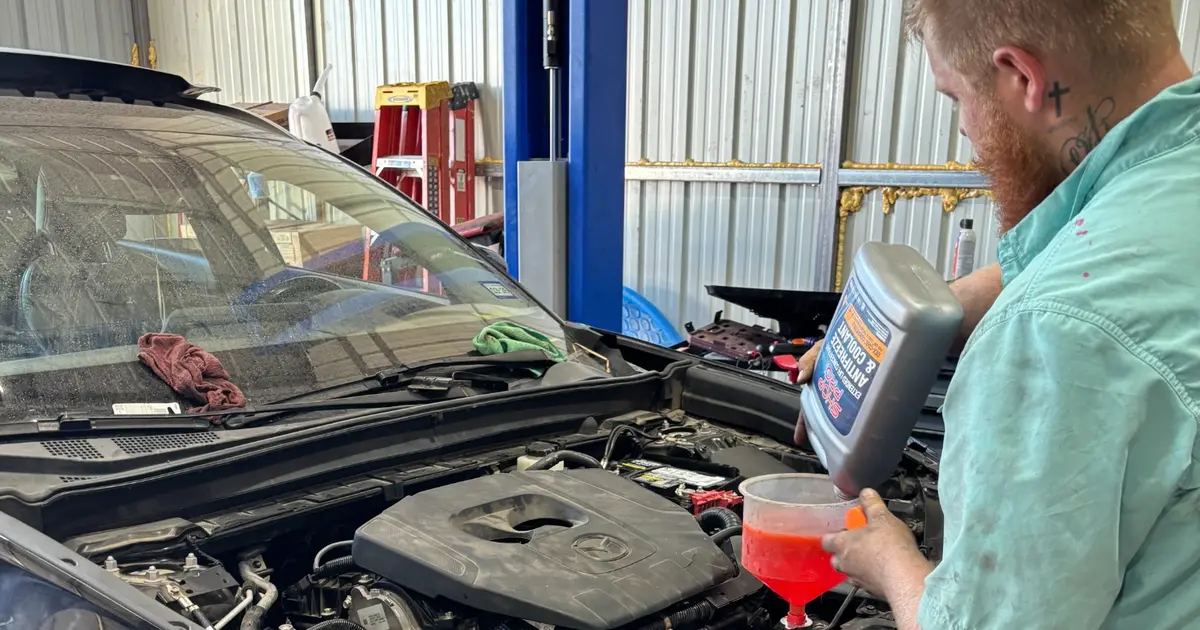
Technician adding coolant during a Mazda cooling-system service.
Overheating: separate loss of coolant from loss of cooling
Low coolant from a leak is one path to overheating. Fan operation, thermostat behavior, water-pump performance, restricted airflow or circulation, and internal engine problems are other possibilities. Repeatedly adding coolant does not establish or repair the cause. A hot, pressurized system can release scalding fluid; Ford: engine coolant safety explains the cap hazard.
| Pattern | Question testing should answer |
|---|---|
| Temperature rises at idle or under load | Is heat being removed properly, and is the system retaining coolant? |
| Persistent white exhaust with coolant loss | Is coolant entering the engine, or is there another source of the loss? |
| Rough running or cylinder misfire | Is the problem ignition, fuel, air, wiring or mechanical sealing? |
| Oil-pressure warning or severe knock | Is lubrication compromised or mechanical damage present? Stop safely; do not keep running it. |
White exhaust is a clue, not a head-gasket diagnosis
Brief condensation during a cold start is different from persistent white exhaust accompanied by unexplained coolant loss. A head-gasket or other internal leak is a possibility, but the symptom alone cannot identify the failed part. Fel-Pro: head-gasket symptoms and causes describes associated warning signs; the vehicle still needs tests that distinguish external leakage, internal leakage and other causes.
Blue exhaust may indicate oil entering combustion, while oil consumption or a new noise may need a separate investigation. Tell the shop which fluid has been added and how often; do not treat color descriptions as proof of an engine failure.
Misfires need their own test path
A misfire may involve a plug or coil, but also fuel delivery, injector control, an air leak, wiring, compression or valve-train condition. The cylinder identified by the computer is where it detected the event—not necessarily the name of a failed component. Delphi: ignition diagnosis and causes highlights power and connection checks in an ignition investigation.
If a flashing light accompanies shaking or major power loss, use the urgent guidance in our flashing-versus-steady check-engine guide. Do not keep towing or accelerating hard to reproduce it.
What engine tests can—and cannot—establish
| Test category | What it helps investigate |
|---|---|
| Cooling-system pressure and leak checks | Whether the system loses pressure and where leakage can be found under the test conditions. |
| Compression or leak-down testing | How well cylinders seal and where a sealing problem may need further investigation. |
| Oil-pressure testing | Whether measured lubrication pressure agrees with the applicable procedure and operating condition. |
| Combustion-gas checks | Evidence of combustion gases in the cooling system, considered with other findings. |
| Operating data and circuit checks | Whether sensor information and electrical commands agree with physical behavior. |
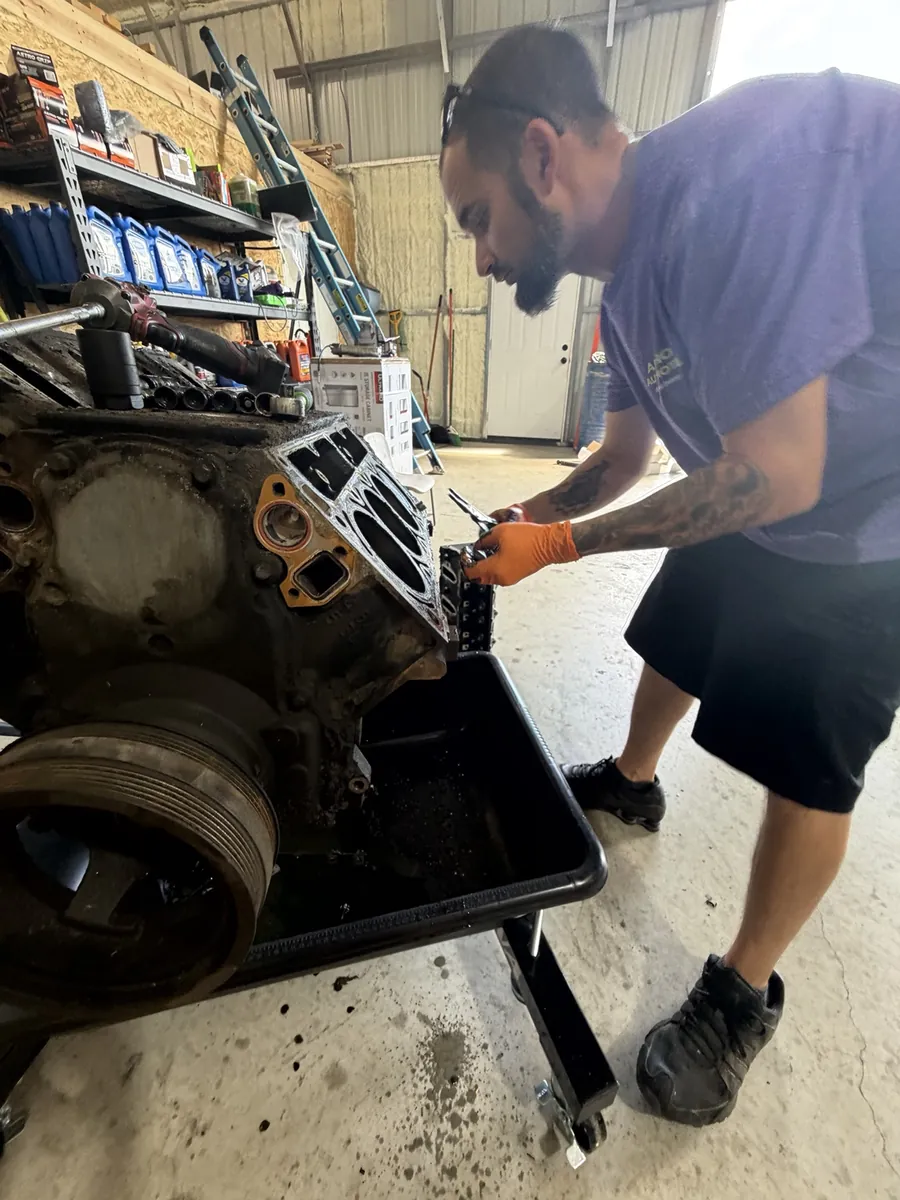
One normal reading does not rule out every intermittent failure, and one abnormal reading does not automatically mean replacement is the only option. Our engine repair service starts with evidence about the failure and the condition of the rest of the engine.
Compare the installed options and warranty
The diagnosis comes first. Compare total installed cost, expected downtime, remaining vehicle condition, and written coverage for each option that is actually available.
| Option | When to consider it | What your estimate should explain |
|---|---|---|
| Repair the existing unit | Testing identifies a limited fault and the remaining unit is suitable for continued service. | Confirmed fault, repair scope, findings that could change the price, and applicable coverage. |
| Rebuild the existing unit | Inspection shows the core can be rebuilt and the required work is practical. | Disassembly authorization, machining and parts, completion expectations, and rebuild-specific warranty. |
| Install a used unit | A compatible donor unit is available and the total cost fits your plan. | Available donor information, compatibility, inspection and installation scope, and the selected vendor’s actual parts-and-labor warranty. |
| Install a remanufactured unit | A suitable remanufactured assembly is available. | Supplier, supplied components, installation requirements, and specific time, mileage, parts, and labor coverage. |
Standard repairs: parts and labor are covered for two years or 24,000 miles, whichever comes first, under normal driving conditions. Extreme hauling or performance use requires manager approval. Low annual mileage does not extend the two-year limit; seals and bushings can age with time and weather.
Used engines and transmissions: the selected vendor’s actual parts-and-labor coverage, limits, and exclusions appear on the estimate and invoice. Remanufactured units: the selected vendor’s time, mileage, parts, and labor terms appear on the estimate and invoice. Most in-house rebuilds carry two years or 24,000 miles, whichever comes first, but the actual rebuild terms and exceptions must be shown on that estimate.
Review the applicable written coverage and claim instructions before approval. No blanket used-unit or remanufactured-unit term applies to every supplier.
Anchor Automotive warranty overview · Ask about an estimate
What the installed estimate should include
- Assembly supplied: repair, rebuild, used, or remanufactured unit; supplier and included components.
- Labor: removal, installation, and any separately authorized teardown or outside work.
- Supporting parts: seals, gaskets, mounts, hoses, and related cooling or lubrication items where required for this application.
- Fluids: required specification, quantity, and applicable service charges.
- Setup and verification: programming, relearn, initial setup, leak checks, and operating or road checks where applicable.
- Total and coverage: taxes, fees, core or freight charges, and the written parts-and-labor warranty for the selected option.
These are estimate questions, not a universal parts package. Only the items required and authorized for your vehicle belong in its estimate.
Frequently asked questions
Should I stop if the engine overheats?
Yes. Move to safety, shut down and arrange assistance. Do not open a hot cooling-system cap or continue driving to see whether it improves.
Does white exhaust always mean a blown head gasket?
No. Brief condensation differs from persistent white exhaust with coolant loss. Testing is needed to identify the cause.
Does a misfire always need spark plugs?
No. Ignition, fuel, air, wiring and mechanical condition can produce similar symptoms.
How do I decide between engine repair and replacement?
Compare the confirmed damage, overall vehicle condition, complete installed scope, availability and written coverage for each suitable option.
Keep reading
Service information
Technical references
Manufacturer and industry references support the explanations above. Use the instructions and specifications for your exact vehicle; examples are not universal repair procedures.
Discuss engine diagnostic testing
Tell us about temperature warnings, coolant or oil loss, rough running and prior repairs. For an overheated or knocking engine, call before moving the vehicle to our Springtown shop.