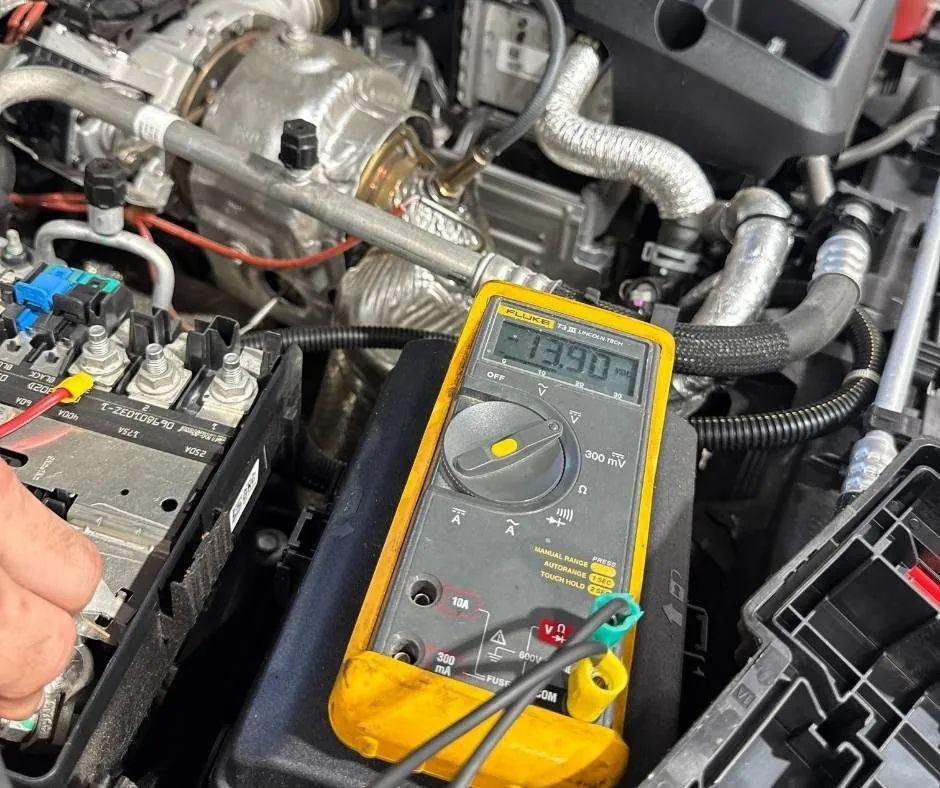
Digital multimeter beside a vehicle battery during electrical testing at Anchor Automotive.
Organize the evidence before the next visit
Download the repair evidence checklist (PDF) · Print a blank copy and keep it with your vehicle records.
Bring the original concern, dated invoices, the findings behind earlier repairs, and what changed afterward. Use the blank record to separate confirmed facts from questions still requiring testing.
The same symptom is not always the same failure
| What happened | What needs clarification |
|---|---|
| The complaint never changed | Whether the original cause remains, another fault overlaps it, or the test conditions differed. |
| It improved, then returned | Timing, operating conditions, repair findings and whether this is a related or new failure. |
| It happens only sometimes | Whether the fault occurred during earlier testing and what conditions reproduce it. |
| Another major part is recommended | Which new finding supports that part and what remains uncertain. |
A second opinion is a review of evidence, not a verdict about another technician. FTC: Auto Repair Basics (PDF) recommends considering a second opinion for complicated or expensive work and asking about diagnostic charges and written estimates.
Bring records that let the next shop start intelligently
- The prior invoice with the original complaint, repair date and mileage.
- Parts replaced, work performed and any test results or scan reports.
- What changed immediately afterward and when the concern returned.
- Available warranty terms and any follow-up instructions.
- A symptom log: hot/cold, wet/dry, speed, load, sitting time and exact messages.
Ask the previous shop about its follow-up and warranty process before authorizing overlapping work elsewhere. Share records privately with the service team; redact unrelated personal or payment information. Keep photos or recordings safe—made while parked or by a passenger, never by the driver handling a phone.
Ask what the first diagnostic authorization will answer
For a second-opinion diagnostic appointment at Anchor Automotive, explain that the symptom remains after work and provide that history. Ask which concern the initial authorization covers, the time or cost limit, what results will be communicated and when further approval might be needed.
An intermittent problem may require monitoring. Access, teardown or testing a second system can expand the work. Agree on how estimate updates and additional authorization will be handled; no article can guarantee every unresolved concern will be confirmed in one session.
Look for a testable reason, not just a named part
A code can identify a circuit or operating condition without proving a component failure. Power, ground, signal wiring, connectors and mechanical condition can affect what a module sees. Delphi: ignition diagnosis and causes gives an ignition example in which supply and connection conditions matter.
Mechanical and electrical faults need different evidence. A circuit measurement does not establish cylinder sealing; a compression test does not rule out an intermittent wire fault. Ask which question the proposed test answers and how the result connects to your complaint. For a warning-light-specific explanation, see the check-engine guide. For a battery repeatedly going flat, the electrical guide explains why timing matters.
What meaningful repair verification looks like
Verification should return to the original complaint under safe, practical conditions. That may involve operating data, a relevant measurement, a leak check, a road test or further monitoring. “The warning is off” and “the original failure was no longer present during a matching test” are not always the same conclusion.
| Stage | What a real record should state |
|---|---|
| Complaint and prior information | Vehicle details, date/mileage, symptom and earlier findings. |
| New test | Question investigated, conditions, actual result and applicable specification. |
| Confirmed cause and authorization | What the evidence supports, uncertainty and approved work. |
| Verification | What was repeated, actual result, remaining concerns and follow-up plan. |
Use this blank checklist to review the actual repair record. Only completed tests and documented findings belong in it. No responsible diagnosis promises that a vehicle will never develop that symptom again.
Five questions to ask any repair shop
- Which finding explains the symptom I reported?
- What alternatives were checked, and what remains uncertain?
- What exactly am I authorizing now?
- What would cause you to request additional approval?
- How will the work be verified, and what written coverage applies?
These questions create a shared understanding of the next step. They do not require blaming the previous shop or promising a particular saving, turnaround or first-time fix.
Frequently asked questions
Does the same symptom prove the previous repair was wrong?
No. It may be an unresolved cause, related fault or new failure. Review the records and current evidence before drawing that conclusion.
Should I bring the previous invoice?
Yes. The original complaint, parts, labor and test findings help the next technician understand what is already known.
Why pay for additional diagnostic testing?
A new investigation takes time to verify the current concern and answer unresolved questions. Confirm the scope and charge first; do not assume the prior repair or a new code proves the next part needed.
Can you investigate an intermittent problem?
Often, but it may require the right operating conditions, longer monitoring and additional authorization. A short test cannot rule out every intermittent fault.
Can you guarantee the problem will never return?
No. Ask what was verified, what limitations remain and which actual written warranty applies to the approved repair.
Keep reading
Service information
Technical references
Manufacturer and industry references support the explanations above. Use the instructions and specifications for your exact vehicle; examples are not universal repair procedures.
Request a second-opinion diagnostic appointment
Tell us what was repaired and what the vehicle still does. Bring prior invoices and findings so our Springtown team can discuss a focused, authorized starting point.