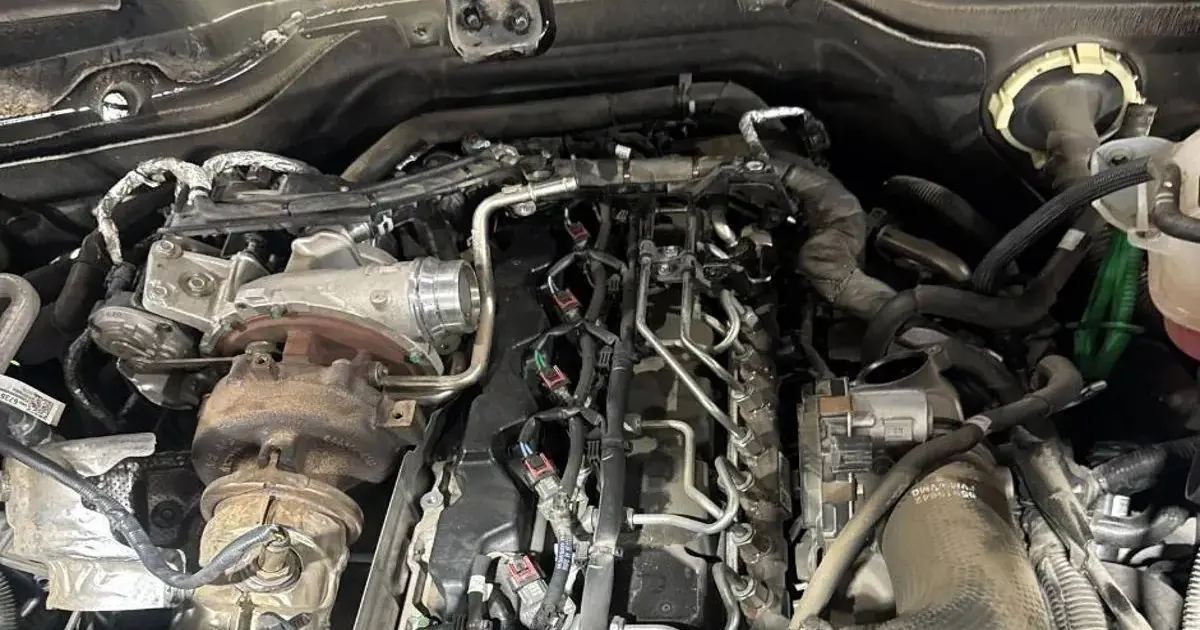
Diesel engine components exposed during diagnostic testing and repair.
Start with the pattern, especially under load
| Pattern | What testing needs to separate | Useful intake detail |
|---|---|---|
| Hard start cold or hot | Cranking speed and voltage, fuel supply, pressure/control and engine condition. | Time parked, temperature, crank duration and recent fuel/filter service. |
| Power loss while towing | Fuel delivery, charge-air leaks, turbo control, cooling, restriction or protective derate. | Trailer/load, hill, speed, ambient conditions and the exact warning. |
| Black, white or blue smoke | Combustion, air/fuel balance, oil use or coolant concerns; color is not a diagnosis. | When it appears and whether fluids are disappearing. |
| Frequent regen or emissions message | Operating pattern, engine condition, sensor data and the aftertreatment system. | Message wording, frequency, trip length and recent repairs. |
Do not deliberately recreate a dangerous loaded condition on a public road. Describe it so the technician can choose a safe test plan. The diesel repair service page explains the shop’s diagnostic and repair scope.
What evidence belongs before expensive diesel parts?
Testing starts with the complaint, codes, captured operating data and related electrical or mechanical checks. Fuel testing may compare requested and actual pressure, supply conditions and injector behavior using the correct procedure. Low measured pressure alone does not identify whether the problem is supply, control, leakage or a mechanical failure. Delphi: common-rail injector diagnosis illustrates why these checks are separated; its equipment and procedures are not a universal pickup specification.
On the air side, comparing commanded and actual boost, checking charge-air plumbing and testing turbo controls helps distinguish lost airflow from a control problem. Cooling-system evidence becomes important if power falls as temperature rises. Power Stroke, Cummins and Duramax systems differ across model years, so neither a familiar symptom nor another truck’s test limit is enough.
Normal regeneration is not the same as a fault
The diesel particulate filter (DPF) traps soot; regeneration is a process that reduces that soot under the appropriate conditions. Some changes in sound, idle or exhaust heat can accompany normal regeneration. Persistent warning messages, unusually frequent events or a derate need evaluation rather than an assumption that every event is normal.
The selective catalytic reduction (SCR) system uses diesel exhaust fluid (DEF) to help control nitrogen-oxide emissions. Exhaust gas recirculation (EGR) serves another function in combustion/emissions control. These names are not interchangeable. An upstream fuel, air, temperature or electrical problem can affect aftertreatment performance.
Ram: 2023 2500/3500 owner’s manual — diesel warnings and DEF (PDF) distinguishes routine filter-cleaning messages from warnings requiring service on the 2023 Ram 2500/3500. Its diesel sections also explain DEF and SCR operation. These instructions apply to that vehicle, not every Power Stroke, Cummins, or Duramax. Use the manual for your exact truck. Do not apply a universal highway-speed recipe, force a regeneration, or ignore an active warning to try to clear it. Keep hot exhaust away from dry vegetation and other combustible material.
What our charge-air photo can tell you
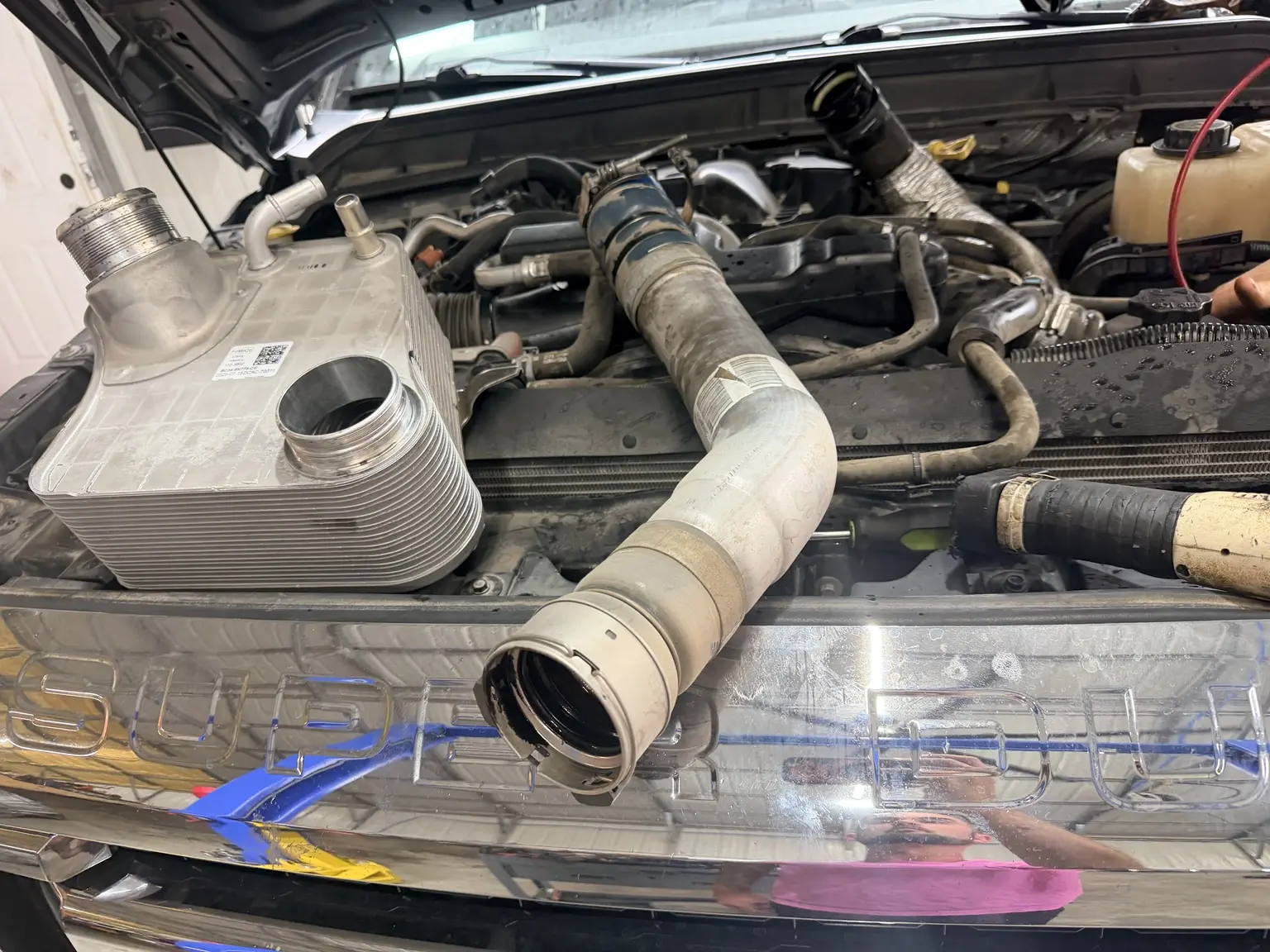
The removed parts show why access and physical inspection can matter when investigating an air-path concern. The image alone cannot prove a leak, establish a pressure reading or show that a turbo was good or bad. Those conclusions belong in a vehicle-specific inspection and repair record. A useful repair record pairs the photo with the complaint, relevant measurements, approved work and verification.
Review the repair decision and verification plan
Before authorizing injectors, a turbocharger or aftertreatment work, ask which finding supports the recommendation, whether related faults remain and what verification is planned. Confirm the initial diagnostic scope and any further testing authorization. Parts access, contamination, multiple faults and intermittent behavior can affect both the estimate and schedule.
Bring prior invoices and codes if the symptom has already been addressed. Our unresolved-repair guide explains a neutral second-opinion process. Once an active fault is addressed, a vehicle-specific maintenance plan can account for towing, idling and service history without inventing one interval for every diesel.
Frequently asked questions
Is diesel emissions-system repair the same as emissions testing?
No. We diagnose and repair supported diesel engine and aftertreatment faults, including EGR, DPF and DEF concerns. We do not perform state emissions testing or emissions inspections. Tell us the exact truck, warning message and symptoms when requesting service.
Why does my diesel lose power only while towing?
Load increases demand on fuel delivery, boost and cooling. A restriction, leak, control issue or protective derate may appear only then; record the conditions so testing can distinguish them.
Does frequent DPF regeneration mean the filter needs replacement?
Not by itself. Driving pattern, engine temperature, fuel/air conditions, sensor information and aftertreatment faults can change regeneration behavior.
Are DEF and DPF warnings the same thing?
No. DPF concerns relate to soot filtration; DEF is used by SCR for a different emissions task. Read the exact message and use the vehicle-specific instructions.
Can weak batteries cause diesel starting problems?
Yes. Adequate cranking speed and stable voltage matter to engine controls and starting. The batteries, connections and charging system may need evaluation together.
Do you work on Power Stroke, Cummins and Duramax?
Anchor Automotive provides diesel diagnostics and repair for these pickup platforms. Give us the year, model and engine so the request matches the correct system.
Should I clear diesel codes before testing?
Usually no. Codes, captured data and history help explain what the truck experienced.
Can an engine problem cause an emissions warning?
Yes. Fuel, combustion, airflow, temperature and electrical faults can influence aftertreatment operation.
What should I bring to a diesel appointment?
Vehicle/engine details, mileage, warning wording, load and temperature conditions, fuel/filter history, fluids added and prior repair records.
Keep reading
Service information
Technical references
Manufacturer and industry references support the explanations above. Use the instructions and specifications for your exact vehicle; examples are not universal repair procedures.
Schedule diesel diagnostic testing
Hard starting or losing power with a trailer? Share the truck, load and exact warning before your visit to our North FM 51 shop. Call first for severe symptoms or an unsafe derate.