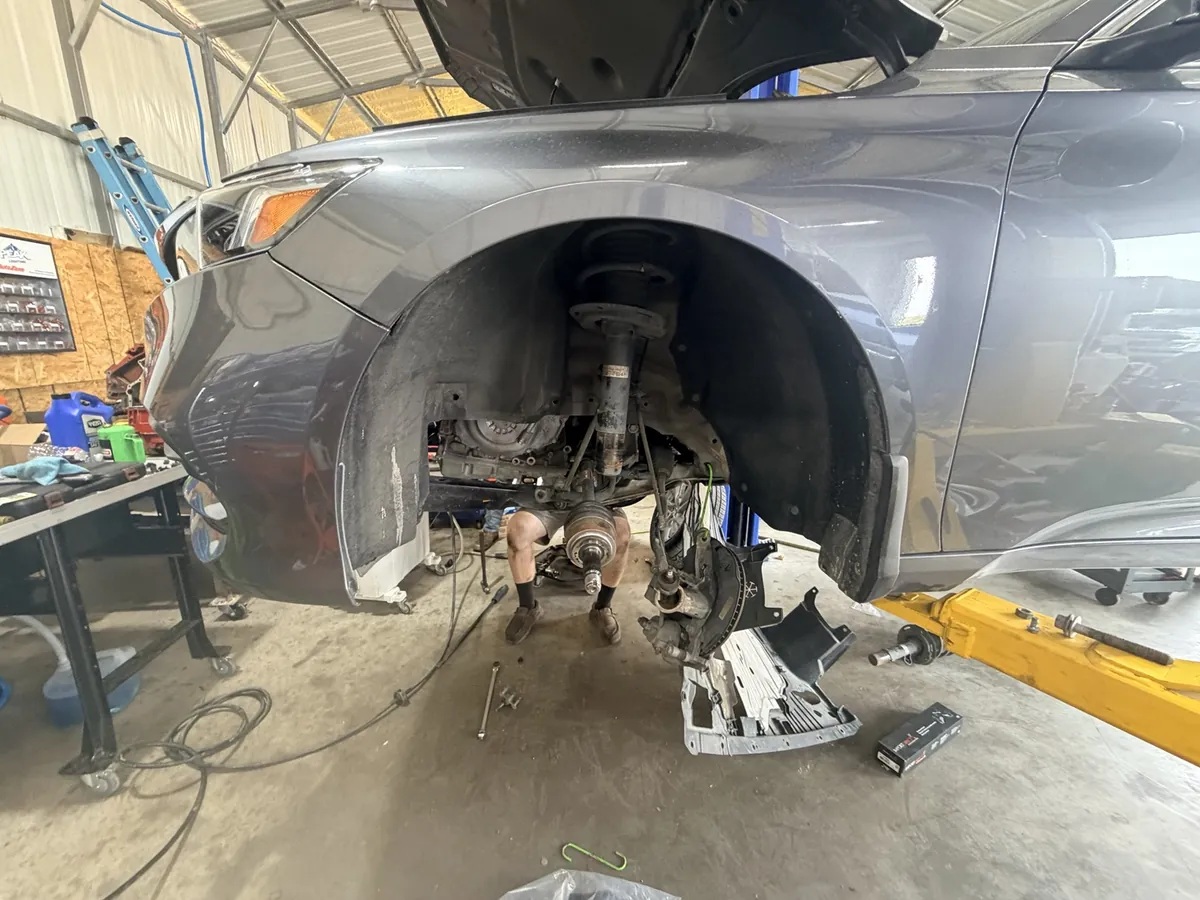
Honda Accord on a lift with front suspension components exposed for repair.
When does the handling change?
| Pattern | Information for the inspection |
|---|---|
| Pull or wandering during normal driving | When it began, speed, load and any accompanying steering looseness. |
| Pull only when braking | Pedal feel, brake noise, vibration and whether the change is sudden. |
| Clunk when crossing bumps | Location of the sound and whether braking or turning changes it. |
| Started after a curb or pothole impact | Impact details, visible damage and any change in ride height or control. |
| Changes with load | Cargo, trailer use, ride height and when the concern occurs. |
| Steering wheel sits off center | Describe the wheel position separately from any actual change in direction. |
If the concern appears primarily while stopping, use the brake noise, vibration and pulling guide too. Tell the shop about both behaviors so the inspection is guided by the symptom rather than an assumed failed part.
Inspect steering and suspension components
Tie rods, ball joints, control-arm bushings, steering linkages, springs and ride-control components can develop wear, damage or unwanted movement. A hands-on inspection helps identify which finding relates to the reported concern. The estimate should identify the component, the observed condition and the proposed repair.
Monroe: symptoms of worn shocks and struts describes symptoms such as bouncing, instability and changes in handling that may accompany worn shocks or struts. A symptom alone does not establish which part has failed. Our steering and suspension service focuses on mechanical inspection and repair.
Separate brake drag from other handling concerns
A brake that does not release properly can contribute to pulling, heat, odor or uneven brake wear. A caliper, hose or other hydraulic concern may require investigation. Do not touch a wheel or rotor to compare temperatures; brake parts can be dangerously hot. Smoke or major braking changes are a reason to stop and arrange help.
A constant pull and a braking-only pull can require different checks. Explain whether the concern starts, stops or changes when you press the pedal, without attempting an unsafe road test.
Check bearings, hubs and ride control
A worn wheel bearing or hub assembly may produce noise or movement that changes with operating conditions. Shocks, struts, mounts and bushings can also affect ride quality and component control. We inspect the parts relevant to the complaint and explain what is confirmed and what still requires testing.
Noise, vibration and looseness are observations to investigate. They are not enough by themselves to justify replacing an entire front end. Ask which finding supports each proposed mechanical repair and how the original concern will be checked afterward.
Review the mechanical repair plan
- Document the symptom and identify immediate safety concerns.
- Inspect relevant steering, suspension and bearing components.
- Evaluate brake operation when braking changes the symptom.
- Explain confirmed findings, remaining questions and the proposed repair.
- Obtain approval and verify the original concern after authorized work.
Bring recent mechanical repair invoices, impact details and information about your normal load or towing use. Record approved work and follow-up in your maintenance plan. Tell the shop about any remaining concern before collecting the vehicle.
Frequently asked questions
Do you offer tire service or wheel alignments?
We inspect and repair steering, suspension, wheel bearings and hubs. We do not sell, mount or patch tires or perform wheel alignments. Ask the advisor which services your vehicle needs so work outside our scope can be planned separately.
What does a steering and suspension inspection include?
The scope follows the complaint and may include tie rods, ball joints, control arms, bushings, shocks, struts, steering assist and wheel bearings.
Can brakes make a vehicle pull?
A braking concern can change direction or pedal feel. Tell the shop whether the pull changes when braking so the affected system can be evaluated.
Does a clunk always mean I need new struts?
No. Links, joints, bushings, mounts, hardware and other mechanical components may cause similar noises. Inspection comes before a parts recommendation.
Is an off-center steering wheel the same as a pull?
No. Tell the shop whether the vehicle changes direction while you maintain control, whether the wheel sits off center, or both. Do not perform a hands-off test.
Keep reading
Service information
Technical references
Manufacturer and industry references support the explanations above. Use the instructions and specifications for your exact vehicle; examples are not universal repair procedures.
Schedule a steering and suspension inspection
Tell us when the handling concern happens and whether there was a recent impact, mechanical repair or change in load. We can discuss the appropriate mechanical inspection for your truck.