
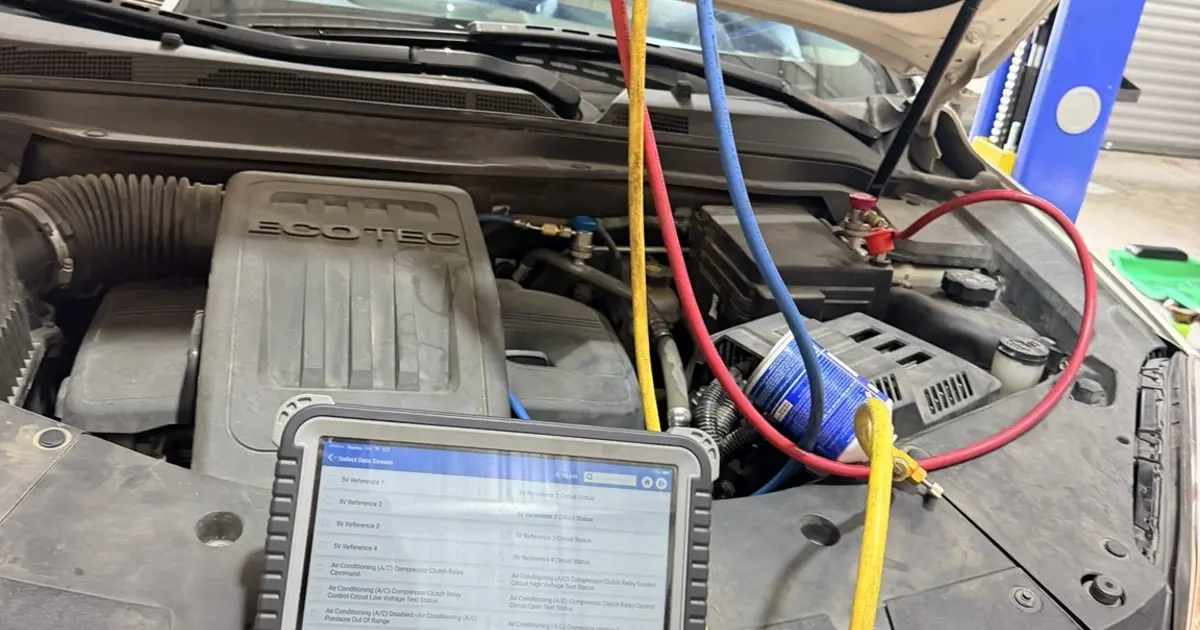
A/C diagnostic scan tool and service hoses connected to a vehicle.
Describe airflow and temperature separately
| What you notice | What needs separating |
|---|---|
| Cold while moving, warmer at idle | Condenser airflow and fan operation, charge, compressor command and operating pressures. |
| Little air from the vents | Blower operation, airflow restrictions, filter condition or air-door operation. |
| Strong airflow, but warm air | Refrigerant circuit, compressor control, sensors or temperature blending. |
| One side or rear vents differ | Temperature-door/control issues, airflow or refrigerant conditions specific to that system. |
| Cooling fades during a longer drive | Changing temperatures, icing, controls or intermittent operation; record when it happens. |
Note the outside conditions, fan setting and whether the problem occurs at stoplights, on a highway trip or after the cabin has already cooled. That description helps shape an A/C performance check in Springtown.
A recharge is not a leak repair
Refrigerant circulates in the system; it is not consumed like fuel. Low charge calls for an explanation, which may include leakage or earlier incorrect service. Adding refrigerant can temporarily improve cooling without fixing why it was low. Guessing the amount can leave the system undercharged or overcharged.
EPA: recharging and refrigerant leaks distinguishes top-off, evacuation/recharge and component leak repair. Accurate service uses the specified refrigerant and charge amount. A very small or intermittent leak may require additional evaluation; a recharge alone should not be described as a permanent repair.
What performance testing should establish
The technician may compare ambient conditions and vent temperature with system pressures, fan and blower operation, compressor command and leak evidence. Those readings need context: there is no one vent-temperature number that proves every vehicle is healthy in every weather condition.
Electrical faults in sensors, relays, wiring or climate-control commands can prevent cooling even when the refrigerant circuit is intact. Compressor-related work also requires attention to the cause and condition of the rest of the circuit. DENSO: causes of A/C compressor failure discusses contamination and lubrication concerns that can affect compressor life.
Restricted airflow and refrigerant performance require different checks. A dirty filter may affect airflow without explaining every cooling concern.
R-134a and R-1234yf: match the vehicle
Anchor Automotive services R-134a and R-1234yf systems. The underhood label and vehicle information establish the correct refrigerant and charge specification; the two are not interchangeable. Tell the shop about previous refrigerant additions, sealants or recent A/C repairs so the service plan accounts for that history.
A recharge request and a leak-repair authorization are different decisions. Ask what the initial performance evaluation includes and whether further leak testing is needed before the estimate can be completed.
Understand the estimate before approving service
- Which checks are included in the initial evaluation?
- Which refrigerant is required, and how is its quantity charged on the estimate?
- The initial performance check includes leak testing. Is further leak diagnosis or UV dye needed and separately quoted?
- Does the recommendation include access labor, the leaking component, required supporting work and recharge?
- What evidence will verify cooling and the repair afterward?
Do not assume an advertised service price includes all refrigerant, every leak test or a component repair. Confirm the scope for your vehicle. Routine maintenance planning is separate from diagnosis of an active A/C fault. If engine temperature is rising too, read the overheating guide before deciding to drive.
Know which A/C service you are authorizing
| Service | Purpose | Before authorizing |
|---|---|---|
| Performance check — $99.99 | Initial evaluation of cooling, airflow, and operation, including leak testing. | Additional work requires a separate explanation and approval. |
| Further leak diagnosis | Follow-up testing when the initial check cannot locate a leak. | Agree on the next test, any dye recheck, its charge, and timing before it begins. |
| Evacuation and recharge | Recover refrigerant, evacuate the system, and recharge with the specified type and measured quantity. | Labor is quoted separately. When this service is required, the original $99.99 check fee is usually waived; your advisor confirms that on the estimate. A recharge does not repair a leak. |
| Repair | Correct the diagnosed leak, component, electrical, or airflow fault. | Review parts, labor, and any required recharge on the repair estimate. |
R134a is $7.23 per ounce; R1234yf is $16.20 per ounce; UV dye is $14.99 extra. These are additional to applicable service labor. We confirm your vehicle’s refrigerant type and total estimate before work begins.
Frequently asked questions
Why is my A/C cold while driving but warm at idle?
Airflow over the condenser, fans, charge level, compressor control and operating conditions can change cooling at idle. Testing is needed to separate them.
Can you just add refrigerant?
The system should be evaluated and serviced to the correct specification. Adding refrigerant without identifying the condition can leave the charge wrong or provide only temporary relief.
Why is only one side cold?
Temperature-door, airflow, sensor/control or refrigerant conditions may create differences. Note which vents differ and whether the setting changes the result.
Do you service R-1234yf?
Yes. Anchor Automotive services R-134a and R-1234yf applications using the appropriate service process.
Will a recharge fix a leak?
No. Recharging and repairing the source of a leak are separate operations. Ask which is included in the estimate.
Keep reading
Service information
Technical references
Manufacturer and industry references support the explanations above. Use the instructions and specifications for your exact vehicle; examples are not universal repair procedures.
Schedule an A/C performance check
Tell us whether airflow is weak or strong, which vents are warm and whether cooling improves on the road. We can discuss the right evaluation for your car, SUV or work pickup.